Industrial Photopolymer 3D Printing Services
High resolution SLA and DLP additive manufacturing for engineering prototypes, medical models, tooling, and production components where precision matters.
Upload your file. Get pricing fast. For teams who are ready to move.
Not sure where to start? Share your idea. We’ll help guide the next step.
Precision Photopolymer 3D Printing
Industrial SLA and DLP 3D printing delivers exceptional surface finish, fine feature resolution, and tight dimensional accuracy for complex engineering applications. IA3D provides industrial photopolymer 3d printing services for rapid prototyping, visual models, tooling, medical components, and precision end-use parts. Using advanced photopolymer additive manufacturing systems, our team produces parts with smooth surfaces, sharp detail, and production-grade consistency across low-volume and bridge manufacturing workflows.
Why Choose IA3D For Your Photopolymer 3D Printing
Hybrid SLA and DLP technology delivers high-accuracy resin components with exceptional detail reproduction and clean surface quality. This process supports demanding geometries, tight tolerances, and complex part features that traditional methods struggle to produce efficiently.
-
Engineering Review Available
-
Tight Tolerance Parts
-
Fast Turnaround
-
Low-Volume Production Support
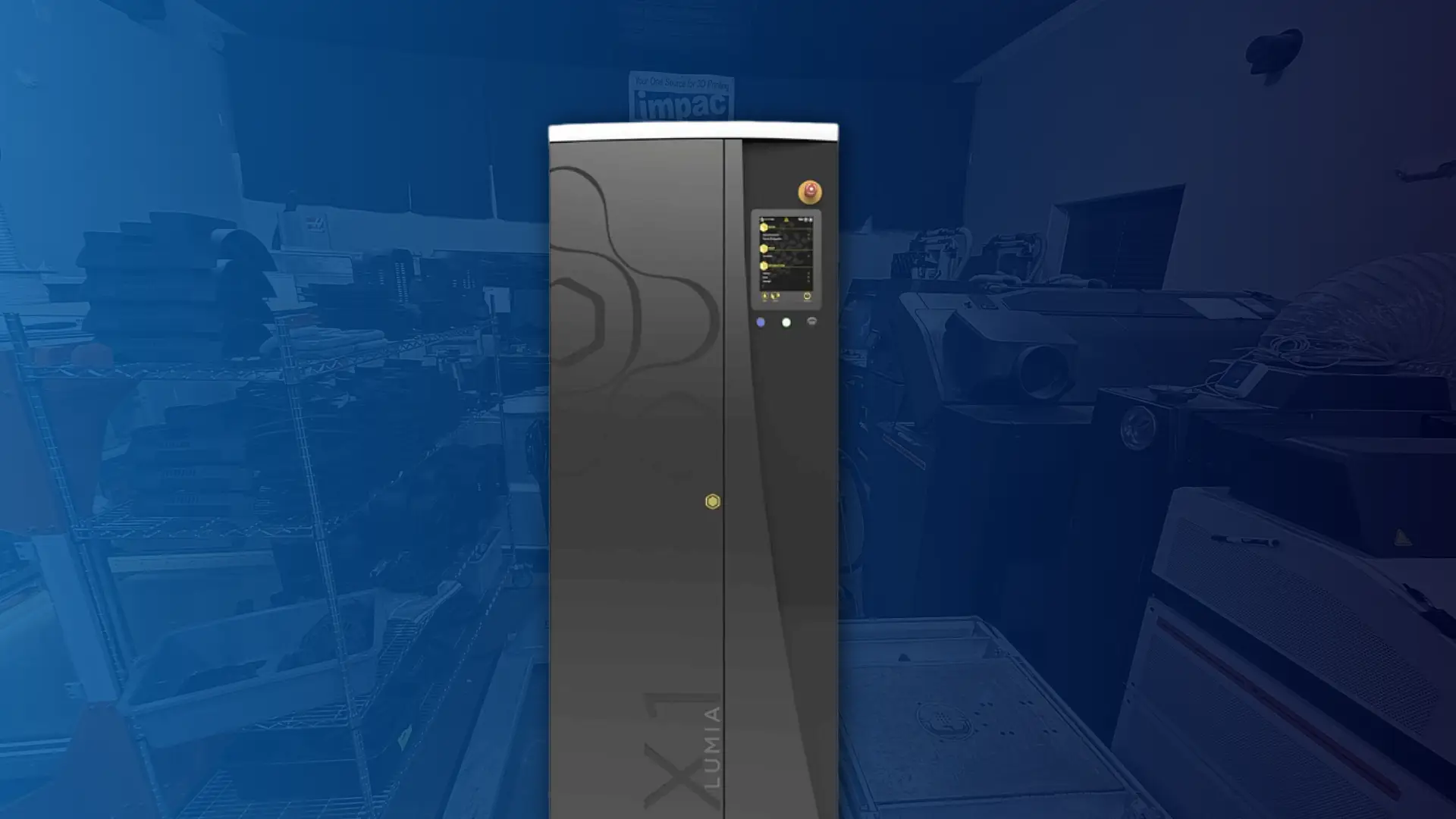
Technology:
Laser and a Digital Light Processing (DLP)
Build Size:
249x 140 x 495
( 9.8 x 5.5 x 19.6in)
Materials:
Ceramic (Ultracur3D RG 3280), Figure 4 PRO-BLK 10, Other materials upon request (Open system compatible with 405 nm resins)
Applications: High-resolution ceramic and engineering resin parts — dental models, transparent prototypes, and casting patterns requiring ±0.05 mm detail.
Standard Dimensional Accuracy:
±0.05 to ±0.1 mm (typical), or about ±0.1%
IA3D's Precision Photopolymer Equipment
Compare Industrial 3D Printing Processes
Click to Open Technical Comparison Chart for All of Our Additive Manufacturing Processes
| Machine | Technology | Build Size | Layer Height | Accuracy | Design/Production Considerations |
|---|---|---|---|---|---|
| HP MJF 5620 | Multi Jet Fusion | 380 × 284 × 380 mm (15 × 11.2 × 15 in) | 0.08 mm | ± 0.3% (min ± 0.3 mm) | |
| HP MJF 4200 | Multi Jet Fusion | 380 × 284 × 380 mm (15 × 11.2 × 15 in) | 0.08 mm | ± 0.3% (min ± 0.3 mm) | |
| One Click Metal MPRINT | DMLS | 150 × 150 × 150 mm | 0.02 – 0.05 mm | ± 0.1% (min ± 0.05 mm) | |
| One Click Metal MPRINTpro | DMLS | 150 × 150 × 250 mm | 0.02 – 0.05 mm | ± 0.1% (min ± 0.05 mm) | |
| BigRep VIIO | Large Format FDM | 500 × 500 × 1000 mm | 0.2 – 0.8 mm | ± 0.5% (min ± 0.5 mm) | |
| BigRep One.5 | Large Format FDM | 1000 × 1000 × 1000 mm | 0.2 – 0.8 mm | ± 0.5% (min ± 0.5 mm) | |
Photopolymer 3D Printing FAQs
Photopolymer 3D printing is an additive manufacturing process that utilizes ultraviolet (UV) light to cure liquid resin into solid parts, layer by layer. This technology is recognized for its excellent surface finish, fine detail resolution, and precise dimensional accuracy. As a result, photopolymer 3D printing is particularly well-suited for creating engineering prototypes, medical models, tooling, and cosmetic components.
SLA (Stereolithography) and DLP (Digital Light Processing) are two prominent photopolymer 3D printing technologies that utilize light to cure liquid resin. SLA technology employs a laser that meticulously traces each layer of the model, enabling high precision and intricate detail. In contrast, DLP technology uses a projected light source to cure entire layers simultaneously, enabling a more efficient production process. While SLA is often favored for its ability to achieve ultra-fine details, DLP is recognized for its faster production speeds and consistent repeatability, making it suitable for a range of applications.
Photopolymer 3D printing is known for its ability to achieve tight dimensional tolerances and high feature resolution, making it a leading choice among various additive manufacturing techniques. The specific tolerances attainable depend on factors such as the object’s geometry, material selection, printing orientation, and any post-processing requirements. This method is frequently used for applications that require precision, including prototype development, fit testing, medical devices, and intricate engineering components. For specific tolerances on your project, speak with an engineer.
Yes. Industrial photopolymer materials are widely used in various applications, including low-volume production, tooling, fixtures, housings, medical components, and functional prototypes. The choice of material is crucial, as different resins provide distinct properties such as strength, heat resistance, flexibility, and chemical resistance. These attributes are significant and should align with the specific requirements of each application to ensure optimal performance and durability.
Yes. Photopolymer parts are highly versatile and can undergo various post-processing techniques. After printing, these parts can be sanded, machined, tapped, painted, coated, and polished. Such finishing processes enhance the cosmetic appearance, dimensional accuracy, and functional performance of the parts. Many engineering and display models utilize these techniques to achieve production-quality surfaces and assembly-ready components.
Photopolymer additive manufacturing is utilized across several key industries, including aerospace, medical, automotive, consumer products, electronics, and industrial manufacturing. This method is particularly advantageous for applications that demand smooth surface finishes, intricate details, transparent components, precision prototypes, and rapid design validation before full-scale production.
Materials
Ultracur3D RG 3280 Ceramic
Excellent for injection mold tooling and high-temperature applications.
Figure 4 PRO
BLK 10
Durable production-grade resin with strong mechanical properties and a clean surface finish.
Additional Materials Available Upon Request
Open platform compatibility supports a broad range of 405nm engineering resins.
Complex Geometry. Clean Surface Finish.
Upload your files for engineering review and production guidance.