Precision Manufacturing for Complex Engineering Work
Additive and subtractive manufacturing under one roof, from first prototype to production run
Impac Additive 3D combines industrial 3D printing and precision machining in a single facility. Fewer production bottlenecks. Less back and forth between vendors. More control over quality, timelines, and finished parts. Engineers and product teams move from complex CAD to validated components faster, with consistent process control, in-house inspection, and one accountable manufacturing partner from build to final delivery.
Our Additive Manufacturing Machine Fleet
We operate a range of industrial additive manufacturing technologies under one roof, each selected for specific engineering and production requirements. From rapid functional prototypes to repeatable end use production, the right process starts with the right manufacturing approach.
Integrated manufacturing workflows across polymers, metals, ceramics, and emerging production capabilities.
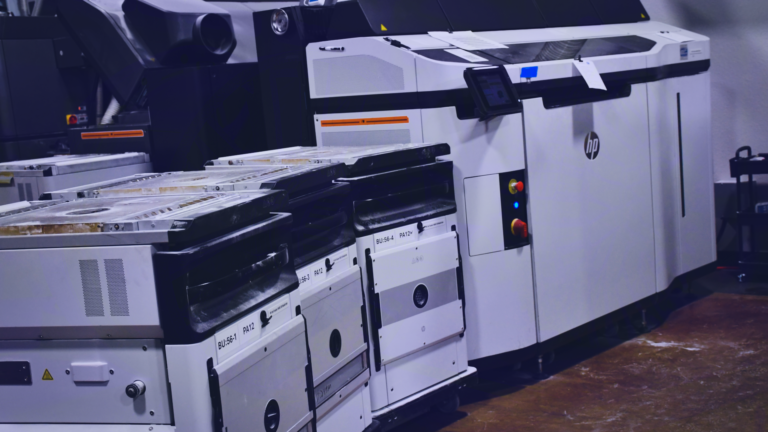
Powdered Polymer 3D Printing Services
HP Multi Jet Fusion and industrial FDM systems.
LEARN MORE
- MJF Production Printing: High-volume nylon parts with consistent mechanical properties. Ideal for end-use production, not just prototyping. Materials include PA12, PA12W, PA11, and TPA
Metal Additive Manufacturing
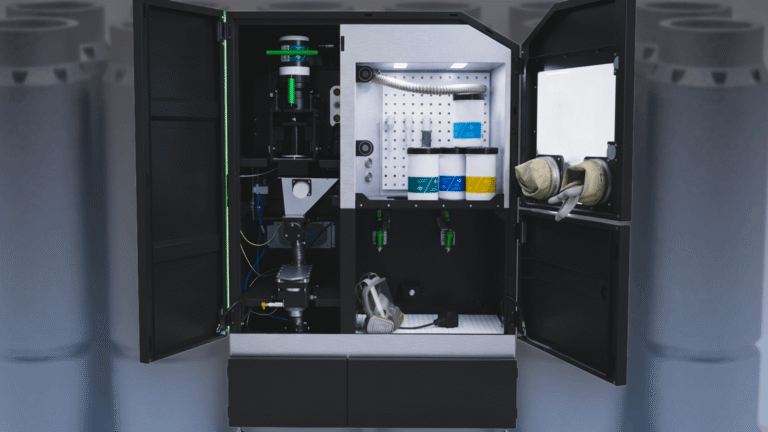
- Materials: 316SS, 17-4SS, Titanium and Ni-718.
- Design Freedom: Produce complex internal channels, consolidated assemblies, and geometries that are difficult or impossible to achieve through traditional machining methods.
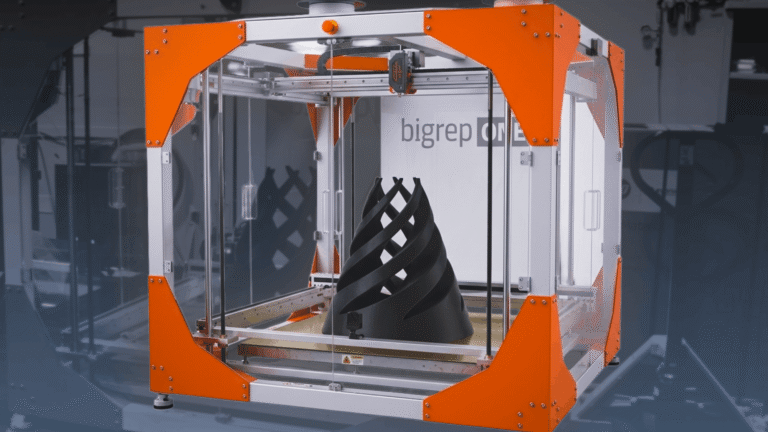
Large Format FDM 3D Printing Services
Industrial-scale thermoplastic printing for oversized prototypes, production tooling, fixtures, and functional end-use components.
Ideal for aerospace, automotive, industrial equipment, robotics, and advanced manufacturing applications.
- Production Tooling: Rapidly produce manufacturing aids, assembly fixtures, and custom tooling with reduced lead times and lower costs.
- Oversized Functional Parts Manufacture large thermoplastic components without assembly constraints or tooling investment.
- Large Build Size: Up to 1 Meter³ (39.37 x 39.37 x 39.37 in)
Precision Photopolymer Manufacturing
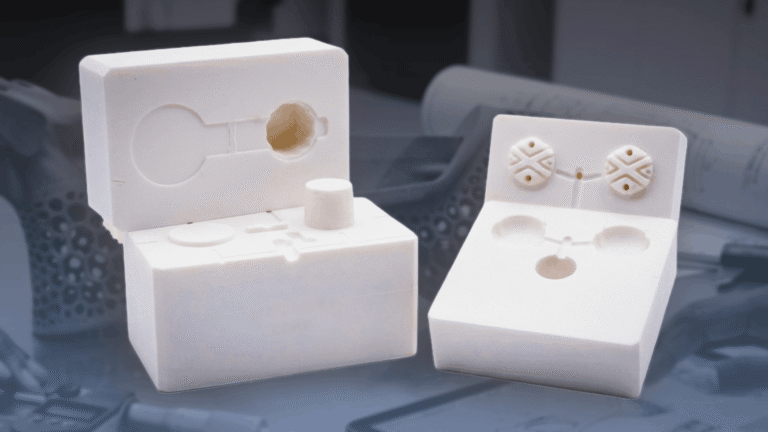
High resolution additive manufacturing for complex geometries, smooth surface finishes, ceramic tooling, and production-grade resin components. IA3D’s hybrid SLA and DLP platform delivers precision parts with excellent feature detail and material flexibility. LEARN MORE
- Hybrid SLA + DLP Technology: Rapidly produce manufacturing aids, assembly fixtures, and custom tooling with reduced lead times and lower costs.
- Ceramic Tooling Applications: Produce ceramic-based tooling components suitable for injection mold tooling and other demanding thermal environments.
- Open Material Platform: Compatible with 405nm resins, including specialized engineering materials.
- Large Z Height Capacity Supports tall parts and vertically oriented geometries up to 495mm.
Compare Industrial 3D Printing Processes
Click to Open Technical Comparison Chart for All of Our Additive Manufacturing Processes
| Machine | Technology | Build Size | Layer Height | Accuracy | Design/Production Considerations |
|---|---|---|---|---|---|
| HP MJF 5620 | Multi Jet Fusion | 380 × 284 × 380 mm (15 × 11.2 × 15 in) | 0.08 mm | ± 0.3% (min ± 0.3 mm) | |
| HP MJF 4200 | Multi Jet Fusion | 380 × 284 × 380 mm (15 × 11.2 × 15 in) | 0.08 mm | ± 0.3% (min ± 0.3 mm) | |
| One Click Metal MPRINT | DMLS | 150 × 150 × 150 mm | 0.02 – 0.05 mm | ± 0.1% (min ± 0.05 mm) | |
| One Click Metal MPRINTpro | DMLS | 150 × 150 × 250 mm | 0.02 – 0.05 mm | ± 0.1% (min ± 0.05 mm) | |
| BigRep VIIO | Large Format FDM | 500 × 500 × 1000 mm | 0.2 – 0.8 mm | ± 0.5% (min ± 0.5 mm) | |
| BigRep One.5 | Large Format FDM | 1000 × 1000 × 1000 mm | 0.2 – 0.8 mm | ± 0.5% (min ± 0.5 mm) | |
Subtractive Finishing & Machining
Tight tolerances. Critical features. Finished in-house — on the same parts we print.
Most shops split printing and machining across two vendors. That adds lead time, cost, and the risk of damage in transit. We keep both processes under one quality system. Print complex DMLS geometry, then machine sealing faces and mating features to ±0.002 in. Build large FDM fixtures, then finish hole patterns to spec. Remove supports, cut threads, hit critical tolerances — without ever moving the part.
CNC Turning
Precision cylindrical features and threads for printed and machined parts.
Capability
Turning, facing, boring, and threading on metal and polymer components
Launching Soon
CNC turning capability is being added to support parts that require concentricity, roundness, and precision threads.
Ideal for shafts, bushings, threaded fittings, and other cylindrical features that benefit from lathe operations.
Enables tighter control of diameters, surface finish, and coaxial features than additive alone.
Designed to integrate into the same workflow as our additive and milling processes, reducing handoffs and setup errors.
Launching soon.
Contact us to discuss upcoming projects that may benefit from turning.
3-Axis Mini Mill
Precision finishing for printed parts. Support removal, critical features, and tight tolerance machining on metals and polymers.
Tolerance
Up to +/- 0.001 – 0.002 on critical features.
Used to bring printed parts to final spec where additive alone falls short.
Machines sealing surfaces, bearing bores, and mating features to tight tolerances. Example: reaming bores for press-fit components.
Removes DMLS supports cleanly without damaging adjacent geometry.
Adds threads, tapped holes, and counterbores directly into printed parts.
Handles small batch production and custom setups across metal and engineering-grade plastics.
Critical features verified with in-house inspection. Certificates of Compliance available upon request.
Typical turnaround is two to three days for finishing operations.
Design With Real Manufacturing Data
Skip guesswork. Review layer height, XY and Z accuracy, minimum feature size, and material properties for every process we offer. Build parts that meet spec the first time.
Engineering-Driven Approach
We don't just print parts — we help you build them better.
Design for
Additive Manufacturing
Our engineers analyze your CAD files and recommend design optimizations to reduce cost, improve strength, and ensure printability. We catch issues before they become failed builds and project delays.
Tolerance
Optimization
We work with your tolerance requirements to select the right process, orientation, and post-processing steps. Every technology has different capabilities — we match them to your needs.
Material Selection
Guidance
Not sure what material is right for your application? Our team helps you navigate material properties — from chemical resistance to heat deflection to biocompatibility.
Ready to Build Something Complex?
Whether it’s 3D printed, machined, or a combination of both — upload your design and let our engineers recommend the optimal method.
Upload your file. Get pricing fast. Most quotes delivered within 24 hours.
Not sure where to start? Share your idea. We’ll help guide the next step.